rishijhawar wrote:Hey Winnie, thanks for a great explanation.
Somehow I am struggling to digest the explanation" The radii will be of the lowest side in the opening as bigger then that wont fit in". I have found similar kind of explanation in some places, but still unable to grasp it totally.
I tried using a diagram, but not 100% sure how to crack this kind of sums on the D day.
Could you please help me here.
Thanks
Another way to think about it:
Volume = height * Pi * (radius)^2
So let us simply attack each height.
If height 10, then the circles will rest on the 6x8 rectangular sides. The longest diameter would be 6 inches, because longer would fall outside of the 6 dimension (see image)
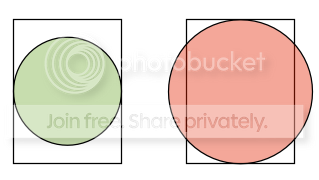
So volume would be 10*Pi*(3)^2
Rather than multiply this out - let's list all the options:
Height, Face
10, 6x8
8, 6x10
6, 8x10
So the 3 volumes would be (in the order listed above):
10*Pi*(3)^2, 8*Pi*(3)^2, 6*Pi*(4)^2
Rather than multiply, factor out (they all have Pi, 2 and 3)
5*3, 4*3, 2*8
15, 12, 16
Height 6 gives the greatest volume,
so radius is 4.

Whit
Whitney Garner
GMAT/GRE/EA Instructor & Anxiety/Accommodations Coach
www.whitneygarner.com
Contributor to Beat The GMAT!
Math is a lot like love - a simple idea that can easily get complicated
























