




How to Replace GMAT Verbal “Tricks” with Real Logical Thinking
If our explanations for why a Verbal answer choice is correct or incorrect are based on gimmicks rather than sound logic, then regardless of what other strategies we use, we are unlikely to achieve consistent success.
This may seem self-evident, yet it is an easy trap to fall into. When we are pressed for time, fatigued, or uncertain, the temptation to rely on shortcuts grows. We begin to look for patterns or surface clues that allow us to move quickly without fully reasoning through the question. Unfortunately, these shortcuts rarely hold up under the analytical rigor the GMAT demands.
For example, let’s say you were solving the following GMAT Critical Reasoning practice question:
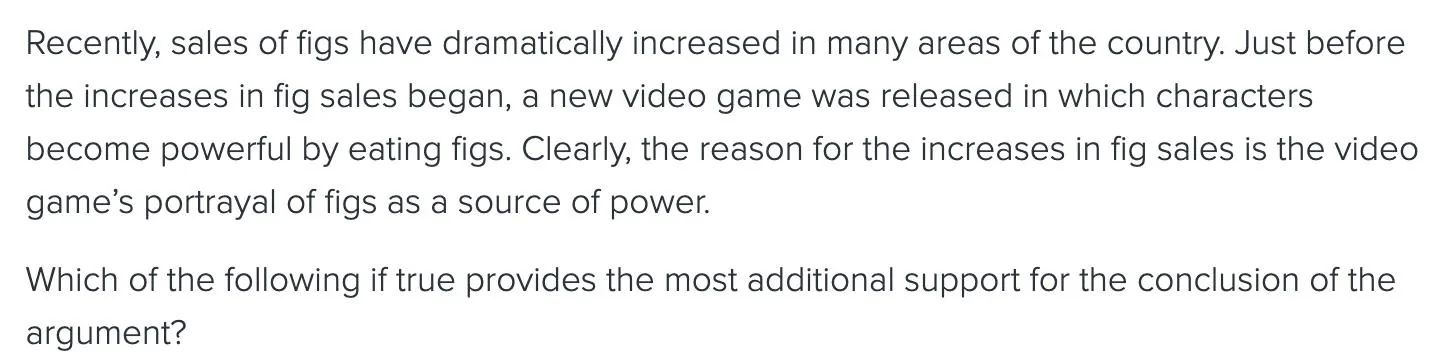
(A) Because fig trees can thrive in a range of climates, it is possible to grow figs in many areas of the country.
Many test-takers might label this choice as “realistic” and therefore potentially correct. But “realistic” has no place in GMAT reasoning. The test does not measure how plausible an idea sounds in everyday life; it measures how well an argument holds together logically. Real-world plausibility and logical validity are two different things, and conflating them can easily lead to mistakes.
Another common error is the automatic rejection of answers containing strong language such as all, none, or always. It is true that these words can signal a problematic generalization, but they do not automatically make an answer wrong. If the passage or argument provides sufficient justification for an absolute statement, that answer could be entirely correct. Instead of reacting to the wording itself, focus on whether the reasoning genuinely supports the strength of the claim.
Similarly, some students look for answers that repeat key words or phrases from the passage. This approach can be equally misleading. The test is designed to include distractors that sound familiar but distort meaning. Language overlap might make an answer feel comfortable or “safe,” but logical accuracy is what counts. Always evaluate what an answer means, not just how it sounds.
What all of these habits share is that they replace genuine reasoning with surface-level pattern recognition. They give the illusion of analytical thinking without requiring it. You might feel efficient when using them, but that efficiency comes at the expense of depth and accuracy.
To make real progress in GMAT Verbal, aim to construct clear, defensible reasoning for every answer choice you select or eliminate. Ask yourself, “What specific part of the passage or argument justifies this conclusion?” and “What logical principle explains why this answer works or fails?” Each time you do that, you strengthen the critical thinking skills the GMAT is designed to test.
Ultimately, the goal is not to “beat” the GMAT with tricks but to think as the test expects a strong candidate to think: carefully, logically, and systematically. The GMAT rewards reasoning, not intuition. The more disciplined your thought process becomes, the more consistent your results will be.
Reach out to me with any questions about your GMAT prep. Happy studying!
Warmest regards,
Scott Woodbury-Stewart
Founder & CEO, Target Test Prep



















