BREAKING: Target Test Prep releases Brand New 2026 On Demand GMAT prep course

Redeem

Target Test Prep · GMAT

Choose how you want to prepare

Learn live with an expert or move at your own pace. Every option includes the complete TTP study system.

★★★★★5.0559 reviews
Vote for Target Test Prep, Newsweek Readers’ Choice Awards 2026
NEWSWEEK READERS’ CHOICE 2026

BIG NEWS! Target Test Prep has been nominated, and they’d love your vote!

TTP has worked incredibly hard to build the best test prep experience possible, and winning Newsweek’s 2026 Readers’ Choice Award for Best Test Prep would mean a lot to them. If TTP has helped you, they’d be incredibly grateful for your vote. You can vote once each day through September 9.

Vote for TTP
GMATLiveTeach 7 seats left
Chris Peckover
NEXT LIVE COHORT

Oct 13 to Jan 7, 2027

with Chris Peckover

Schedule
Tue, Thu · 8:00 to 10:00 PM ET
Included
40 live hours + 6 months of GMAT OnDemand
  • Live instruction and real-time questions
  • Class recordings and assigned practice
View class & enroll
Limited cohort · enrollment openTarget Test Prep
EALiveTeach 5 seats left
Logan Thompson
EXECUTIVE ASSESSMENT

Sep 6 to Dec 6, 2026

with Logan Thompson

Schedule
Sun · 9:30 AM to 12:30 PM ET
Included
40 hours of live online classes plus six months of access to the complete TTP EA OnDemand course.
  • 165+ EA Score Guarantee
  • 4,100+ Quant, Verbal, and Integrated Reasoning practice questions
  • 400+ hours of in-depth video lessons
  • 3,000+ step-by-step video solutions
View EA class & enroll
Limited cohort · enrollment openTarget Test Prep
GMATOnDemand Start anytime
SELF-PACED MASTERCLASS

Target Test Prep GMAT OnDemand

Complete access from day one. Study on your schedule.

715+ score guarantee
$0to start then $127/mo
  • Personalized study plan and analytics
  • Thousands of lessons and practice questions

Compare the format, schedule, and included access before enrolling. Prices and seat counts shown reflect the supplied offer details.

Hardiness Zones - Must Be True Question

Expert replies
by nikhilgmat31 » Wed Aug 26, 2015 9:57 pm
The U.S. Department of Agriculture divides the North American continent into
"hardiness zones." These zones are based on the average winter temperature
and are used to determine what types of plants will likely survive in a given
area. Zone 1 represents the coldest average winter temperature and zone 13
the warmest. The zones are closely correlated with, but do not exactly match
another set of eleven zones that indicate the length of the growing season.
Minneapolis is in hardiness zone 4 and Denver is in hardiness zone 6.

Which of the following statements is most supported by the information
above?


(A) During the coming winter, the lowest recorded temperature in
Minneapolis will be lower than the lowest recorded temperature in
Denver.
(B) The growing season in Denver is much longer than the growing season
in Minneapolis.
(C) A greater variety of plants can be grown in Denver, due to the warmer
average winter low.
(D) Factors other than average winter temperature affect the length of the
growing season.
(E) At least one U.S. city has a colder average winter temperature than
does Minneapolis.
Join the discussion
Source: — Critical Reasoning |

by bubbliiiiiiii » Thu Aug 27, 2015 2:19 am
Hardiness Zones - Zones based on average winter temperature and the type of plants that survive temperatures.

Zone 1 - coldest and Zone 13 - warmest.

Zones ( I suppose hardiness zones) are closely corelated with another set of zones based on length of growing season.

Minneapolis - Zone 4
Denver - Zone 6

Lets jump to options.
(A) During the coming winter, the lowest recorded temperature in
Minneapolis will be lower than the lowest recorded temperature in
Denver.


This question is based on mathematical concept of avgs. Avg of Minneapolis be 1.5 (1 and 2) and Denver be 5.25 (0.5 and 10). Thus, its possible that Minneapolis despite between lower numbered zone has min temp greater than a greater numbered zone. ELIMINATE.
(B) The growing season in Denver is much longer than the growing season
in Minneapolis.
We are not sure of what kind of co-relation the two zones share. So, ELIMINATE.
(C) A greater variety of plants can be grown in Denver, due to the warmer
average winter low.
While zones are made based on the type of plant that survives in such cold temperatures, no mention of the type or variety of plants is given. Thus, ELIMINATE.
(D) Factors other than average winter temperature affect the length of the
growing season.
We aren't sure to comment since no sufficient information is given in passage.
(E) At least one U.S. city has a colder average winter temperature than
does Minneapolis.
Since Minneapolis is zone 3 there should be two other colder zones. Thus, possible. CORRECT.


IMO E
Regards,

Pranay
Join the discussion

by nikhilgmat31 » Thu Aug 27, 2015 2:46 am
Hi bubbliii,

I also think of E.

Bot OA is D.
based on below statement
The zones are closely correlated with, but do not exactly match another set of eleven zones that indicate the length of the growing season.

source - Veritas GMAT Foundation
Join the discussion

by ddg » Thu Aug 27, 2015 7:11 am
nikhilgmat31 wrote:The U.S. Department of Agriculture divides the North American continent into
"hardiness zones." These zones are based on the average winter temperature
and are used to determine what types of plants will likely survive in a given
area. Zone 1 represents the coldest average winter temperature and zone 13
the warmest. The zones are closely correlated with, but do not exactly match
another set of eleven zones that indicate the length of the growing season.
Minneapolis is in hardiness zone 4 and Denver is in hardiness zone 6.

Which of the following statements is most supported by the information
above?


(A) During the coming winter, the lowest recorded temperature in
Minneapolis will be lower than the lowest recorded temperature in
Denver.
(B) The growing season in Denver is much longer than the growing season
in Minneapolis.
(C) A greater variety of plants can be grown in Denver, due to the warmer
average winter low.
(D) Factors other than average winter temperature affect the length of the
growing season.
(E) At least one U.S. city has a colder average winter temperature than
does Minneapolis.
---------------------------------------------------------------------------------------------------------

Hi :) OA is D

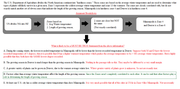
Please refer to the image attached, I hope it clears out your doubts :)

Image

Consider both D) and E)

E) We can't be sure there is at least one city which lies in a zone lower than Minneapolis. All cities in the lower region may belong to zone 4 itself. So E can be eliminated.

D) on the other hand is a must be true statement - because the zones aren't completely correlated as in Zone (temp) = Zone (growing season) is not true. So this IS true.

I've explained it more deeply in the image attached. Please do check it out :)
-------------------------------------------------------------------------------------------------------
In times of stress, Fashion is always outrageous ;-)

If my explanation helped you, please lemme know by clicking the 'thank' button! :)
Join the discussion

by KarenVH » Fri Aug 28, 2015 2:57 pm
The fact that Minneapolis is in Zone 4 doesn't necessarily mean that there are cities with a colder average temperature, because we haven't been told that Zones 1, 2 or 3 actually have any cities in them. They might be just rural areas with small towns, or pure wilderness. But the fact that the zones indicating length of growing season don't perfectly correlate with the zones for average winter temperature means that there must be something other than average temperature that determines the length of the growing season. Therefore, it's D.


Karen v.H.

-------

If you find my posts helpful, please click the "thank" icon at the top of the page and/or follow me!

Karen is the Head Verbal Tutor for Test Prep New York/Test Prep San Francisco. TPSF/TPNY is the only test prep co. that fuses content mastery and test-taking strategy with positive mindset. Tests, after all, don't measure only what you know or how well you know it; tests also measure how well you take tests.


Test Prep New York/Test Prep San Francisco
Maximize your Score, Minimize your Stress!
testprepny.com

Twitter: TestPrepNY
Join the discussion

by nikhilgmat31 » Mon Aug 31, 2015 4:15 am
yes Karen but E seems very tempting answer at first instance.

It is difficult to digest the fact that "Factors other than average winter temperature"

I think second to the last line in argument suggest that other factors are responsible.
Join the discussion