

BREAKING: Target Test Prep releases Brand New 2026 On Demand GMAT prep course

Redeem

Target Test Prep · GMAT

Choose how you want to prepare

Learn live with an expert or move at your own pace. Every option includes the complete TTP study system.

★★★★★5.0559 reviews
Vote for Target Test Prep, Newsweek Readers’ Choice Awards 2026
NEWSWEEK READERS’ CHOICE 2026

BIG NEWS! Target Test Prep has been nominated, and they’d love your vote!

TTP has worked incredibly hard to build the best test prep experience possible, and winning Newsweek’s 2026 Readers’ Choice Award for Best Test Prep would mean a lot to them. If TTP has helped you, they’d be incredibly grateful for your vote. You can vote once each day through September 9.

Vote for TTP
GMATLiveTeach 7 seats left
Chris Peckover
NEXT LIVE COHORT

Oct 13 to Jan 7, 2027

with Chris Peckover

Schedule
Tue, Thu · 8:00 to 10:00 PM ET
Included
40 live hours + 6 months of GMAT OnDemand
  • Live instruction and real-time questions
  • Class recordings and assigned practice
View class & enroll
Limited cohort · enrollment openTarget Test Prep
EALiveTeach 5 seats left
Logan Thompson
EXECUTIVE ASSESSMENT

Sep 6 to Dec 6, 2026

with Logan Thompson

Schedule
Sun · 9:30 AM to 12:30 PM ET
Included
40 hours of live online classes plus six months of access to the complete TTP EA OnDemand course.
  • 165+ EA Score Guarantee
  • 4,100+ Quant, Verbal, and Integrated Reasoning practice questions
  • 400+ hours of in-depth video lessons
  • 3,000+ step-by-step video solutions
View EA class & enroll
Limited cohort · enrollment openTarget Test Prep
GMATOnDemand Start anytime
SELF-PACED MASTERCLASS

Target Test Prep GMAT OnDemand

Complete access from day one. Study on your schedule.

715+ score guarantee
$0to start then $127/mo
  • Personalized study plan and analytics
  • Thousands of lessons and practice questions

Compare the format, schedule, and included access before enrolling. Prices and seat counts shown reflect the supplied offer details.

full scholarships tend to maintain higher grade point.....

Expert replies
by cherry yeung » Wed Dec 28, 2016 7:05 am
HI,

I have been trying hard to understand the explanation in the book but still don't get it at all. Could anyone please help to explain why the answer is D?

4. A recent university study indicated that students who receive full scholarships tend to maintain higher grade point averages than do students who must take out loans or work to achieve high grade point averages by alleviating the stress related to financial concerns and freeing up students' time to study more.

The study's conclusion depends on which of the following assumptions?

(A) Students who take out loans maintain higher grade point averages than those who work to finance school.
(B) Finance-related stress affects student performance in a manner similar to that of restricted study time.
(C) Students who must work to pay for their studies cannot maintain high grade point averages
(D) High grade point averages were not the primary criterion upon which the scholarship awards were based.
(E) Controlling stress level is less important to student performance than is intensive studying.

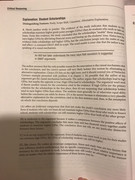
Please see attached picture taken from the book on explanation...
Image
Join the discussion
Source: — Critical Reasoning |

by DavidG@VeritasPrep » Fri Dec 30, 2016 12:04 pm
cherry yeung wrote:HI,

I have been trying hard to understand the explanation in the book but still don't get it at all. Could anyone please help to explain why the answer is D?

4. A recent university study indicated that students who receive full scholarships tend to maintain higher grade point averages than do students who must take out loans or work to achieve high grade point averages by alleviating the stress related to financial concerns and freeing up students' time to study more.

The study's conclusion depends on which of the following assumptions?

(A) Students who take out loans maintain higher grade point averages than those who work to finance school.
(B) Finance-related stress affects student performance in a manner similar to that of restricted study time.
(C) Students who must work to pay for their studies cannot maintain high grade point averages
(D) High grade point averages were not the primary criterion upon which the scholarship awards were based.
(E) Controlling stress level is less important to student performance than is intensive studying.

Please see attached picture taken from the book on explanation...
Image
This is a causality argument. The conclusion is that having a scholarship causes students to get higher grade point averages. As an arrow diagram it would look like this: scholarship ---> high GPA

This argument assumes that it's not the other way around. If scholarship students don't have high GPA's because having a scholarship affords them more time to study, but because the students only received a scholarship as a result of their high GPA's, then the conclusion would be incorrect. In other words, it might be the case that it's not scholarships that are causing high grades, it's high grades that are qualifying students for scholarships. This is what D is addressing.

To see this more clearly, if we negate D we get, "High grade point averages were the primary criterion upon which the scholarship awards were based." Well if high GPA's were the only criterion on which scholarships were based, then the argument no longer holds - it's not scholarships causing high grades, but high grades causing scholarships. Because the correct answer, when negated, undermines the argument, we can see that D is correct.
Veritas Prep | GMAT Instructor

Veritas Prep Reviews
Save $100 off any live Veritas Prep GMAT Course
Join the discussion

















