Live GMAT classes with Target Test Prep start Nov 21 and Nov 22. First class free.

See classes
Target Test Prep · GMAT

Choose how you want to prepare

Learn live with an expert or move at your own pace. Every option includes the complete TTP study system.

Newsweek Readers’ Choice Awards 2026 winner: Target Test Prep, #1 Test Prep

Target Test Prep was voted #1 Best Test Prep in the 2026 Newsweek Readers’ Choice™ Awards.

★★★★★5.0563 reviews
GMATLiveTeachStarts Nov 22
Josh Braslow, Target Test Prep GMAT expert
LIVE ONLINE CLASSES

Get Ready for GMAT Test Day Faster with Live Online Classes

with Josh Braslow, 20+ years in test prep

Nov 22 · Josh Braslow
Sun · 9:30 AM to 12:30 PM ET
Included
40 hours of live online classes + 6 months of TTP OnDemand
  • Attend the first class for free
  • Every class is recorded, so you never fall behind
View classes & enroll
Limited seats availableTarget Test Prep
EALiveTeachOnDemandStart anytime
EXECUTIVE ASSESSMENT

Target Test Prep EA OnDemand

Self-paced EA prep. Study on your schedule.

EXECUTIVE ASSESSMENT

with

165+ EA score guarantee
$05-day trial no automatic billing
Schedule
Included
40 hours of live online classes plus six months of access to the complete TTP EA OnDemand course.
  • 165+ EA Score Guarantee
  • 4,100+ Quant, Verbal, and Integrated Reasoning practice questions
  • 400+ hours of in-depth video lessons
  • 3,000+ step-by-step video solutions
View EA class & enroll Start free 5-day trial
Limited cohort · enrollment openTrial includes full course accessTarget Test Prep
GMATOnDemandStart anytime
SELF-PACED MASTERCLASS

Target Test Prep GMAT OnDemand

Complete access from day one. Study on your schedule.

715+ score guarantee
$0to start then $127/mo
  • Personalized study plan and analytics
  • Thousands of lessons and practice questions

Bold faced CR

Expert replies
by prachi18oct » Tue May 05, 2015 10:53 am
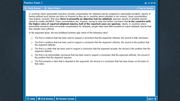
Image


WHat are the two conclusions made by the commentators:-

Premise 1) There is no objective tests for whiplash
Conclusion 1) The spurious reports of the whiplash injuries cannot be readily identified.
Conclusion 2) In the countries with higher rates of whiplash injuries, half of the cases are spurious.

Argument conclusion :- The commentators are correct in arguing for 1) but wrong for 2) as the people have little incentive to report if the insurance does not provide compensation for the injuries

SO I chose D as I incorrectly took it as the intermediate conclusion but if it had been worded as below , would it be better than A ?

The first is the evidence that has been used to support a conclusion that the argument accepts; the second is the position that the argument opposes.


Please let me know.
Join the discussion
Source: — Critical Reasoning |

by GMATGuruNY » Wed May 06, 2015 9:00 am
In countries where automobile insurance includes compensation
for whiplash injuries sustained in automobile accidents, reports of
having suffered such injuries are twice as frequent as they are in
countries where whiplash is not covered. Some commentators
have argued, correctly, that since there is presently no
objective test for whiplash
, spurious reports of whiplash
injuries cannot be readily identified. These commentators are,
however, wrong to draw the further conclusion that in the
countries with the higher rates of reported whiplash injuries, half of
the reported cases are spurious
: clearly, in countries where
automobile insurance does not include compensation for whiplash,
people often have little incentive to report whiplash injuries that
they actually have suffered.

In the argument given, the two boldfaced portions play which of the
following roles?

A: The first is evidence that has been used to support a conclusion
that the argument criticizes; the second is that conclusion
B: The first is evidence that has been used to support a conclusion
that the argument criticizes; the second is the position that the
argument defends
C: The first is a claim that has been used to support a conclusion
that the argument accepts; the second is the position that the
argument defends
D: The first is an intermediate conclusion that has been used to
support a conclusion that the argument defends; the second is
the position that the argument opposes.
E: The first presents a claim that is disputed in the argument; the
second is a conclusion that has been drawn on the basis of that
claim.
BF2 = CONCLUSION of the OPPOSITION:
In the countries with the higher rates of reported whiplash injuries, half of the reported cases of are spurious.
BF1 = PREMISE supporting the conclusion of the OPPOSITION:
There is presently no objective test for whiplash.

CONCLUSION of the PASSAGE:
The opposition is WRONG to draw the further conclusion that half of the reported cases are spurious.
PREMISE supporting the conclusion of the PASSAGE:
In countries where automobile insurance does not include compensation for whiplash, people often have little incentive to report whiplash injuries that they actually have suffered.

The correct answer choice must indicate that BF1 is a PREMISE supporting the conclusion of the OPPOSITION and that BF2 is the CONCLUSION of the OPPOSITION.
A: The first is evidence that has been used to support a conclusion that the argument criticizes; the second is that conclusion.

The correct answer is A.
Last edited by GMATGuruNY on Wed May 06, 2015 9:05 am, edited 1 time in total.
Private tutor exclusively for the GMAT and GRE, with over 20 years of experience.
Followed here and elsewhere by over 1900 test-takers.
I have worked with students based in the US, Australia, Taiwan, China, Tajikistan, Kuwait, Saudi Arabia -- a long list of countries.
My students have been admitted to HBS, CBS, Tuck, Yale, Stern, Fuqua -- a long list of top programs.

As a tutor, I don't simply teach you how I would approach problems.
I unlock the best way for YOU to solve problems.

For more information, please email me (Mitch Hunt) at [email protected].
Student Review #1
Student Review #2
Student Review #3

Join the discussion

by prachi18oct » Wed May 06, 2015 9:04 am
prachi18oct wrote:Image

SO I chose D as I incorrectly took it as the intermediate conclusion but if it had been worded as below , would it be better than A ?

The first is the evidence that has been used to support a conclusion that the argument accepts; the second is the position that the argument opposes.


Please let me know.

Can you please tell me if the above understanding is ok ? The argument accepts that the commentators are correct in saying the their is indeed no objective tests for whiplash injuries ?
Join the discussion

by GMATGuruNY » Wed May 06, 2015 9:22 am
prachi18oct wrote:
SO I chose D as I incorrectly took it as the intermediate conclusion but if it had been worded as below , would it be better than A ?

The first is the evidence that has been used to support a conclusionthat the argument accepts; the second is the position that the argument opposes.

Can you please tell me if the above understanding is ok ? The argument accepts that the commentators are correct in saying the their is indeed no objective tests for whiplash injuries ?
The portion in red mischaracterizes the purpose of BF1.
BF1 serves to support a conclusion that the argument OPPOSES (that half of the reported cases of whiplash are spurious).

Both sides accept as FACT that spurious reports of whiplash cannot be identified.
Information accepted as fact cannot be considered a conclusion.
Private tutor exclusively for the GMAT and GRE, with over 20 years of experience.
Followed here and elsewhere by over 1900 test-takers.
I have worked with students based in the US, Australia, Taiwan, China, Tajikistan, Kuwait, Saudi Arabia -- a long list of countries.
My students have been admitted to HBS, CBS, Tuck, Yale, Stern, Fuqua -- a long list of top programs.

As a tutor, I don't simply teach you how I would approach problems.
I unlock the best way for YOU to solve problems.

For more information, please email me (Mitch Hunt) at [email protected].
Student Review #1
Student Review #2
Student Review #3
Join the discussion