Timer
00:00
Your answer
Difficulty–
right wrong
Pick an answer to see how members did
8question types
Log this miss in the free GMAT error log
Get the error log60days
Get one like this every day: the free 60-day plan
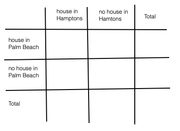
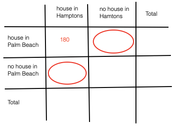
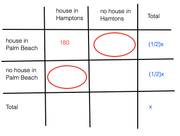
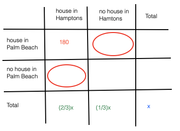
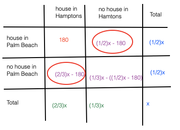
Start the planAt a charity fundraiser, 180 of the guests had a house both in the Hamptons and in Palm Beach. If not everyone at the fundraiser had a house in either the Hamptons or Palm Beach, what is the ratio of the number of people who had a house in Palm Beach but not in the Hamptons to the number of people who had a house in the Hamptons but not in Palm Beach?
(1) One-half of the guests had a house in Palm Beach.
(2) Two-thirds of the guests had a house in the Hamptons
OA E
Source: Manhattan Prep