



Timer
00:00
Answers
A
B
C
D
E
Stats
Difficulty—
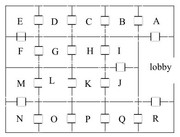
The figure above represents the floor plan of an art gallery that has a lobby and 18 rooms. If Lisa goes from the lobby into room A at the same time that Paul goes from the lobby into room R, and each goes through all of the rooms in succession, entering by one door and exiting by the other, which room will they be in at the same time ? (below is the attached image)
(1) Lisa spends 2x minutes in each room and Paul spends 3x minutes in each room.
(2) Lisa spends 10 minutes less time in each room than Paul does.
OA is A
Is this correct approach ?
(1) Let the rate for Lisa 1/2
Let the rate for Paul 1/3
Both started at the same time. So, the equation is
(1/2 + 1/3) * t = 18
Hence, sufficient
(2). rate of Lisa 1/(x - 10)
rate of Paul 1/x
[1/(x - 10) + 1/x ] * t = 18
2 variables one equation. So, insufficient.
Is this approach correct ?
(1) Lisa spends 2x minutes in each room and Paul spends 3x minutes in each room.
(2) Lisa spends 10 minutes less time in each room than Paul does.
OA is A
Is this correct approach ?
(1) Let the rate for Lisa 1/2
Let the rate for Paul 1/3
Both started at the same time. So, the equation is
(1/2 + 1/3) * t = 18
Hence, sufficient
(2). rate of Lisa 1/(x - 10)
rate of Paul 1/x
[1/(x - 10) + 1/x ] * t = 18
2 variables one equation. So, insufficient.
Is this approach correct ?




















