soumya_165 wrote:James and Andrea take a trip in Andrea's car. On the first leg of the trip, they drive 40 miles per hour to their destination. On the second leg, they turn around and return by the same route in 4 hours. How long do they spend driving on the first leg?
STATEMENT 1:
Their average speed for the entire trip is 35 miles per hour.
STATEMENT 2:
The distance to their destination is 110 miles.
a) Statement (1) BY ITSELF is sufficient to answer the question, but statement (2) by itself is not.
b) Statement (2) BY ITSELF is sufficient to answer the question, but statement (1) by itself is not.
c) Statements (1) and (2) TAKEN TOGETHER are sufficient to answer the question, even though NEITHER statement BY ITSELF is sufficient.
d) EITHER statement BY ITSELF is sufficient to answer the question.
e) Statements (1) and (2) TAKEN TOGETHER are NOT sufficient to answer the question, requiring more data pertaining to the problem.
Hi soumya_165!
I'm definitely with das.ashmita on this one, the answer should be D, but please be careful when you post or with the types of content you use - this question is not written correctly. Both statements DO give you an answer, BUT they give you different answers - A BIG GMAT NO-NO (and I tried several ways of re-writing the problem to see if I could correct the numbers and wasn't able to find anything that worked)!!
But, the math involved is actually very typically GMAT so definitely worth reviewing!
This question talks about
Average Speed, a concept many GMAT Test Takers confuse so let's start there. The fundamental formula is:

We can write Average Speed (A) in terms of the actual trip in the following way:
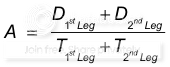
For this question, we don't know the distance to or from the destination, BUT we know they are the same so we can call those simply D. We know that the time for the 2nd leg is 4 hours, but we only know the rate for the first leg. But that is okay - we can calculate Time using D=RT.

So we're ready to plug this into the Average Rate formula & Simplify (the most important step of ANY DS problem):
Find common denominator to combine the denominator fractions:

Simplify the division by multiplying by the reciprocal:

Okay, so this simplified expression is the information the question is GIVING US. Now, what is the question ASKING us for??
"How long do they spend driving on the first leg?"
Well, we actually solved this to plug into the Average Speed Formula...
So looks like all we really need to know is D!
That means I am REALLY liking the looks of Statement (2), so I'm going to start there:
Statement (2): "The distance to their destination is 110 miles."
This says that D=110, so
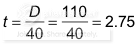 SUFFICIENT - eliminate A, C, and E
Statement (1): "Their average speed for the entire trip is 35 miles per hour."
SUFFICIENT - eliminate A, C, and E
Statement (1): "Their average speed for the entire trip is 35 miles per hour."
This says that A=35, so let's plug into that Average Speed formula from above, cross multiply, simplify and solve for D:
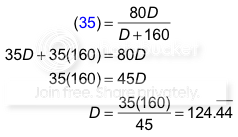
**Notice that at any point in this equation we could have stopped and said "hey, this is a single equation with a single unknown, we should be able to solve this - but just to show the steps of simplification and the actual result (that is different from the D given in statement (2)), I went through the work.
Plug this in for our time:
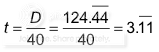 SUFFICIENT - the answer is D, BOTH are sufficient
Now just remember to always be careful of the sources where you find your study material - words to live by: "Bad Advice is FAR WORSE than no advice!!"
Hope this helps!

Whit























