BREAKING: Target Test Prep releases Brand New 2026 On Demand GMAT prep course

Redeem

Probability that neither will occur

Expert replies
by yass20015 » Sun Aug 30, 2015 1:03 pm
If the probability is 0.54 that stock A will increase in value and the probability is 0.68 that stock B will increase in value, what is the great possible probability that neither of these two event will occur ?
a) 0.22
b) 0.32
c) 0.37
d) 0.46
e) 0.63

Any idea ? thanks
Join the discussion
Source: — Problem Solving |

by GMATGuruNY » Sun Aug 30, 2015 1:13 pm
If the probability is 0.54 that stock A will increase in value during the next month and the probability is 0.68 that stock B will increase in value during the next month, what is the greatest possible value for the probability that neither of these 2 events will occur?
A) 0.22
B) 0.32
C) 0.37
D) 0.46
E) 0.63
We want to make it AS HARD AS POSSIBLE for A and/or B to occur.
Strategy:
Make one of the probabilities DEPENDENT on the other.
In other words, make it so that one of the events can't happen UNLESS the other event happens.

Let's rephrase the problem so that one of the probabilities is more clearly dependent on the other.
Since the non-dependent event does NOT require the other event -- making it EASIER for the non-dependent event to happen -- the non-dependent event must have the GREATER of the two probabilities.

Let B = John buys a lottery ticket.
P(B) = 0.68.
Let A = John wins the lottery.
P(A) = 0.54.
Here, the probability of A is clearly dependent on the probability of B: John can win the lottery only if he first buys a ticket.
Question rephrased:
If the probability that John wins the lottery is 0.54, and the probability that John buys a lottery ticket is 0.68, what is the greatest possible value for the probability that neither of these two events will occur?

A. 0.22
B. 0.32
C. 0.37
D. 0.46
E. 0.63
If John DOESN'T buy a lottery ticket, then NEITHER event (buying a ticket, winning the lottery) occurs.
P(John doesn't buy a lottery ticket) = 1 - 0.68 = 0.32.

The correct answer is B.
Private tutor exclusively for the GMAT and GRE, with over 20 years of experience.
Followed here and elsewhere by over 1900 test-takers.
I have worked with students based in the US, Australia, Taiwan, China, Tajikistan, Kuwait, Saudi Arabia -- a long list of countries.
My students have been admitted to HBS, CBS, Tuck, Yale, Stern, Fuqua -- a long list of top programs.

As a tutor, I don't simply teach you how I would approach problems.
I unlock the best way for YOU to solve problems.

For more information, please email me (Mitch Hunt) at [email protected].
Student Review #1
Student Review #2
Student Review #3
Join the discussion

by yass20015 » Sun Aug 30, 2015 1:21 pm
Thanks but if we follow your strategy, in this case why not: 1-0.54 ? which is gretaer tha 1-0.64 ??
Join the discussion

by DavidG@VeritasPrep » Sun Aug 30, 2015 1:53 pm
If the probability is 0.54 that stock A will increase in value and the probability is 0.68 that stock B will increase in value, what is the great possible probability that neither of these two event will occur ?
a) 0.22
b) 0.32
c) 0.37
d) 0.46
e) 0.63
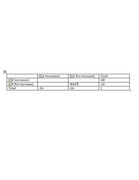
I like to use the matrix on this one. The sum of P(A) and P(Not A) will always be 1, so we our initial set-up will look like this:

Image

If we want to maximize the intersection of P(A not increase) and P(B not increase) we're limited by the .32, which represents P(B not increase.)
Veritas Prep | GMAT Instructor

Veritas Prep Reviews
Save $100 off any live Veritas Prep GMAT Course
Join the discussion

by GMATGuruNY » Mon Aug 31, 2015 3:15 am
yass20015 wrote:Thanks but if we follow your strategy, in this case why not: 1-0.54 ? which is gretaer tha 1-0.64 ??
We need to determine the greatest possible value for the probability that John neither buys a ticket nor wins the lottery.

1 - 0.54 = the probability John does not win the lottery.
But this value does not include the probability that John does not buy a ticket, since it is possible that John buys a ticket before he loses.

1 - 0.68 = the probability does not buy a ticket.
This value includes BOTH probabilities -- the probability that John does not buy a ticket AND the probability that he does not win the lottery -- since not buying a ticket makes it impossible for John to win the lottery.
Thus:
The greatest possible value for the probability that neither buys a ticket nor wins the lottery = 1 - 0.68 = 0.32.
Private tutor exclusively for the GMAT and GRE, with over 20 years of experience.
Followed here and elsewhere by over 1900 test-takers.
I have worked with students based in the US, Australia, Taiwan, China, Tajikistan, Kuwait, Saudi Arabia -- a long list of countries.
My students have been admitted to HBS, CBS, Tuck, Yale, Stern, Fuqua -- a long list of top programs.

As a tutor, I don't simply teach you how I would approach problems.
I unlock the best way for YOU to solve problems.

For more information, please email me (Mitch Hunt) at [email protected].
Student Review #1
Student Review #2
Student Review #3

Join the discussion

by Matt@VeritasPrep » Fri Sep 04, 2015 5:29 pm
yass20015 wrote:Thanks but if we follow your strategy, in this case why not: 1-0.54 ? which is gretaer tha 1-0.64 ??
This is a good idea, but if you make the probability of B dependent on the probability of A, you'll be in trouble: A is LESS LIKELY than B! So if A forces B to happen, the probability of A must be ≥ the probability of B, since A always would give you B.

An example, since this is pretty abstract: suppose that the probability of me getting a dog this year is .68, and the probability of me naming that dog Yuri is .54. I can't name the dog Yuri without getting him first, so the second probability is dependent on the first, and must be less than or equal to it. (In other words, the probability of getting a dog is .68, and is broken down further into two scenarios: the dog's not being named Yuri (probability = .14) and the dog's being named Yuri (probability = .54).)
Join the discussion