BREAKING: Target Test Prep releases Brand New 2026 On Demand GMAT prep course

Redeem

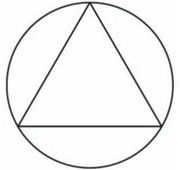
In the figure above, an equilateral triangle is inscribed

Expert replies
by VJesus12 » Sat Jan 05, 2019 7:03 am

Timer

00:00

Answers

A

0%

B

0%

C

0%

D

0%

E

0%

Stats

Difficulty

0% CorrectAvg —

0% IncorrectAvg —

Image

In the figure above, an equilateral triangle is inscribed in a circle. If the arc bounded by adjacent corners of the triangle is between 4Ï€ and 6Ï€ long, which of the following could be the diameter of the circle?

(A) 6.5
(B) 9
(C) 11.9
(D) 15
(E) 23.5

[spoiler]OA=D[/spoiler]

Source: Manhattan GMAT
Join the discussion
Source: — Problem Solving |

by [email protected] » Sun Jan 06, 2019 11:33 am
Hi VJesus12,

We're told that in the figure above, an EQUILATERAL triangle is inscribed in a circle and the arc bounded by adjacent corners of the triangle is between 4Ï€ and 6Ï€ long. We're asked which of the following COULD be the diameter of the circle. As scary as this question might look, it's based on a couple of standard Geometry rules, so you can answer it with just a little work.

To start, an equilateral triangle has 3 equal angles - and since the triangle is inscribed in the circle, each of the three 'arc pieces' is equal in length. Thus, the total of those three arcs (re: the circumference of the circle) is between (3)(4Ï€) and (3)(6Ï€). If the total circumference is between 12Ï€ and 18Ï€, then we can 'work backwards' to find the possible diameter....

12π = 2π(R) = πD..... Diameter = 12
18π = 2π(R) = πD..... Diameter = 18

There's only one answer that's between 12 and 18...

Final Answer: D

GMAT assassins aren't born, they're made,
Rich
Contact Rich at [email protected]
Image
Join the discussion

by Scott@TargetTestPrep » Fri Feb 01, 2019 5:23 pm
VJesus12 wrote:Image

In the figure above, an equilateral triangle is inscribed in a circle. If the arc bounded by adjacent corners of the triangle is between 4Ï€ and 6Ï€ long, which of the following could be the diameter of the circle?

(A) 6.5
(B) 9
(C) 11.9
(D) 15
(E) 23.5

[spoiler]OA=D[/spoiler]

Source: Manhattan GMAT
Since each arc is bounded by adjacent corners of the triangle representing 1/3 of the circumference, the range of values of the circumference is:

Minimum:

1/3(C) = 4Ï€

C = 12Ï€, so the diameter would be 12.

Maximum:

1/3(C) = 6Ï€

C = 18Ï€, so the diameter would be 18.

The diameter is between 12 and 18, so a possible diameter is 15.

Answer: D

Scott Woodbury-Stewart
Founder and CEO
[email protected]

Image

See why Target Test Prep is rated 5 out of 5 stars on BEAT the GMAT. Read our reviews

ImageImage
Join the discussion