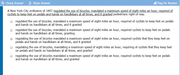
dassabyasachi14 wrote:Thanks Marty for your prompt response and giving an explanation to this question. I have a small doubt though.
From your explanation, I understood that here the list of verbs- mandated, required and regulated are used as main verbs and not as verb-ed modifier. Is there any way to understand where verb-ed modifier is used and where a main verb is used??
Thanks!!
Since the words themselves look the same whether they serve as verbs or verb-ed modifiers, in order to determine whether a particular verb form word that ends in
ed is serving as a verb or a modifier you have to consider placement, structure and, maybe most importantly, meaning.
For one thing, the fact that you are seeing a sentence in the GMAT verbal section does not mean that suddenly you should handle that sentence as if it's from some alien world and therefore none of the normal things having to do with sentences matter.
Often people doing GMAT SC questions don't even look at the sentences as sentences. They look at little bits of the sentences, seeking to find specific errors.
To score high on GMAT SC, look at the entire sentences end to end and determine whether in the real world they are effective.
In the real world you know the difference between the main verb of a sentence and the modifiers in a sentence. The verb is what's going on. The modifiers describe things.
That having been said, here are some specific things that you could notice.
- Verb-ed modifiers often come before rather than after the word that they modify.
The freshly washed vegetables sat on the counter.
- Verb-ed modifiers that are non restrictive and that come after a noun are separated from what they modify by commas.
John's bike , now repaired and painted, worked as if it were brand new.
- In a sentence in which the word ending in ed is the main verb, the word can't be a modifier, because there will be no verb.
Sasha, having missed a key deadline, berated the man who had forgotten to deliver the package.
A verb-ed modifier will often be followed by
by. This one is restrictive. So notice that there is no comma between the modifier and what it modifies.
The water tainted by plastic related chemicals was discarded.