san2009 wrote:In the figure shown above, two identical squares are inscribed in the rectangle. If the perimeter of the rectangle is 18 by squareroot2, then what is the perimeter of each square?
(A)8√2
(B)12
(C)12√2
(D)16
(E)18

Since the height of the rectangle and the diagonal of a square are the same length, let's let
x = height of rectangle
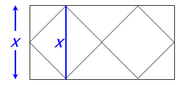
Since the width of the rectangle is equal to the length of two square diagonals, then the width of the rectangle =
2x.
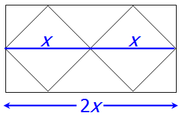 The area of the rectangle is 36.
So, (base)(height) = 36
(2x)(x) = 36
2x²= 36
x²= 18
x = √18
NOTE: There's no need to simplify √18 at this point (you'll see why shortly)
If the height of the rectangle is √18, then the length of the red line (shown below) must equal √18/(2)
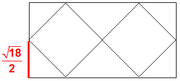
Likewise, the other red line has length √18/(2)
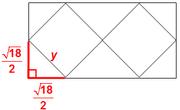
If we let
y = the length of the hypotenuse, then the Pythagorean Theorem states that...
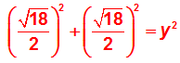
Now solve this equation for
y.
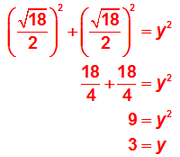
If
y = 3, then the perimeter of one square = (4)(
3) =
12
Answer:
B
Cheers,
Brent
Brent Hanneson - Creator of GMATPrepNow.com
























