BREAKING: Target Test Prep releases Brand New 2026 On Demand GMAT prep course

Redeem

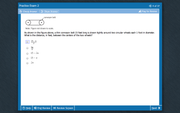
The thin conveyor belt

Expert replies
Source: — Problem Solving |

by GMATGuruNY » Mon Nov 16, 2015 8:22 pm
Image
Last edited by GMATGuruNY on Mon Nov 16, 2015 8:28 pm, edited 1 time in total.
Private tutor exclusively for the GMAT and GRE, with over 20 years of experience.
Followed here and elsewhere by over 1900 test-takers.
I have worked with students based in the US, Australia, Taiwan, China, Tajikistan, Kuwait, Saudi Arabia -- a long list of countries.
My students have been admitted to HBS, CBS, Tuck, Yale, Stern, Fuqua -- a long list of top programs.

As a tutor, I don't simply teach you how I would approach problems.
I unlock the best way for YOU to solve problems.

For more information, please email me (Mitch Hunt) at [email protected].
Student Review #1
Student Review #2
Student Review #3
Join the discussion

by didieravoaka » Mon Nov 16, 2015 8:57 pm
GMATGuruNY wrote:Image

Thank you Mitch, this is very helpful.
But I still have two questions:
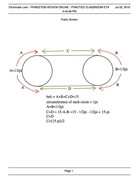
1. Why the belt isn't equal to A+B+C instead of A+B+C+D since C=D?
2. Why C is not equal to 15-pi. Then C would be the answer. Meaning that it represents the distance between the centers.

Why this is not the case?

Thanks.
Join the discussion

by jain2016 » Mon Nov 16, 2015 11:29 pm
Hi Mitch ,

Why did you do A=1/2 pie. Please explain.

Also is there any other approach for this question?

Please advise.

Many thanks in advance.

SJ.
Join the discussion

by Jim@StratusPrep » Tue Nov 17, 2015 8:43 am
1/2 pi is used because each is 1/2 of a circle with a diameter of 1.


didieravoaka-

1) it would have to be A + B + 2C = 15
2) should make sense from #1
GMAT Answers provides a world class adaptive learning platform.
-- Push button course navigation to simplify planning
-- Daily assignments to fit your exam timeline
-- Organized review that is tailored based on your abiility
-- 1,000s of unique GMAT questions
-- 100s of handwritten 'digital flip books' for OG questions
-- 100% Free Trial and less than $20 per month after.
-- Free GMAT Quantitative Review

Image
Join the discussion