BTGmoderatorDC wrote: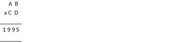
In the correctly-worked multiplication problem above, each symbol represents a different nonzero digit. What is the value of C?
(1) D is prime.
(2) B is not prime.
OA
D
Source: Veritas Prep
We can do the prime factorization of 1995.
1995 = 5*3*7*19.
A possible combination of numbers could be 5*3 = 15 and 7*19 = 133 (Not possible since 133 is not a 2-digit number).
Another possible combination could be 5*7 = 35 and 3*19 = 57. This is also not possible since in 35 and 57, digit 5 is common; it is given that each symbol represents a different nonzero digit.
Another possible combination could be 7*3 = 21 and 5*19 = 95. This is possible since in 21 and 95, each digit is a different nonzero digit.
So, AB = 21 and CD = 95 OR AB = 95 and CD = 21. So, C = 2 or 9.
So, we have to determine c is 2 or 9.
Let's take each statement one by one.
(1) D is prime.
Since D is prime, CD can be 95 as 5 is a prime number. Thus, C = 9. Sufficient.
(2) B is not prime.
=> AB = 21. AB cannot be 95 since 5 is prime. Thus, CD = 95 and C = 9. Sufficient.
The correct answer:
D
Hope this helps!
-Jay
_________________
Manhattan Review GMAT Prep
Locations:
GMAT Classes in Manhattan |
GMAT Tutoring New York |
GRE Prep Seattle |
Manhattan TOEFL | and many more...
Schedule your free consultation with an experienced GMAT Prep Advisor!
Click here.























