Hi ardz24,
We're told that triangle ABC is a RIGHT triangle. We're asked for the area of the triangle. To answer this question, we'll need to know the base and the height of the triangle.
1) Side AB measures 5 meters and Side BC measures 13 meters
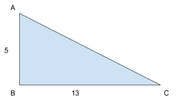
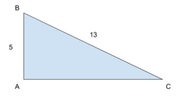
Since we don't know the 'orientation' of the triangle, we don't know which two sides are represented by the information in Fact 1. If those two sides are the 'short' sides, then the area of the triangle is (1/2)(5)(13) = 32.5. However, if the hypotenuse of the triangle is the 13, then the 'other' short side is 12 (a 5/12/13 right triangle) and the area is (1/2)(5)(12) = 30.
Fact 1 is INSUFFICIENT
2) Angle ABC measures 90 degrees.
Fact 2 defines the angle that is the 90 degree angle, but does not give us any measurements to work with.
Fact 2 is INSUFFICIENT
Combined, we know which angle is the 90 degree angle and that the two sides mentioned in Fact 1 must be the two 'short' sides. Thus, the answer to the question is (1/2)(5)(13) = 32.5
Combined, SUFFICIENT
Final Answer: C
GMAT assassins aren't born, they're made,
Rich