Geometry question

This topic has expert replies
Source: — Problem Solving |

GMAT/MBA Expert

User avatar
GMAT Instructor
Posts: 16207
Joined: Mon Dec 08, 2008 6:26 pm
Location: Vancouver, BC
Thanked: 5254 times
Followed by:1268 members
GMAT Score:770

by Brent@GMATPrepNow » Mon Nov 02, 2015 8:43 am
Image

In the figure above, points P and Q lie on the circle with center O. What is the value of S?

a) 1/2
b) 1
c) √2
d) √3
e) (√2)/2
Here's one approach:
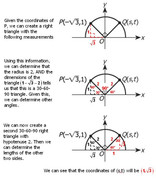
Image

So, s = 1
Answer: B

Cheers,
Brent
Brent Hanneson - Creator of GMATPrepNow.com
Image

GMAT/MBA Expert

User avatar
Elite Legendary Member
Posts: 10392
Joined: Sun Jun 23, 2013 6:38 pm
Location: Palo Alto, CA
Thanked: 2867 times
Followed by:511 members
GMAT Score:800

by [email protected] » Mon Nov 02, 2015 10:20 am
Hi april24,

Brent's approach to solving this question is exactly how I wouldn't have done it, so I won't rehash that explanation. Instead I'll point out the patterns and "hints" that were in the original drawing (and that you should be on the lookout for when dealing with similar questions).

1) Any time you see a diagonal line segment on a graph, you can draw a right triangle using that line as the hypoteneuse.

2) Right triangles on the GMAT are almost always pattern-based (angles or sides; at the very least, the Pythagorean Theorem). Here, we have a 1 and a √3, so we should be thinking 30/60/90.

3) Radii have the same length no matter what direction they go in.

4) Lines "add up" to 180 degrees.

GMAT assassins aren't born, they're made,
Rich
Contact Rich at [email protected]
Image

Master | Next Rank: 500 Posts
Posts: 152
Joined: Fri Apr 24, 2015 1:39 am
Location: Rourkela Odisha India
Thanked: 2 times
Followed by:3 members
GMAT Score:650

by akash singhal » Tue Nov 03, 2015 11:44 pm
april24 wrote:Please suggest the best approach to answer this question.
Answer S=1
Use 30-60-90 Approach