With DIGIT questions like this, usually the only strategy is to TEST NUMBERS.
N.b. This can make these questions time-consuming, and it's hard to be sure if you tested everything. For many students, these questions are a good candidate for guessing.
When solving this one, don't dive straight into the answer choices. First, unpack the given information in the question stem. Since the two numbers multiply to 864, we should find the PRIME FACTORIZATION of 864:
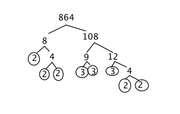
864 = (2^5)(3^3)
We now know that 3"¢ and 2∆ must represent multiples of 2 and 3 only, so let's list the possibilities:
1.
32*
27 --->
(2^5)(3^3)
2.
36*
24 ---> (
(2^2)(3^2))(
(2^3)(3^1))
32 and 36 are the only two numbers in the 30s that contain only 2 and/or 3 as factors, so these must be the only possibilities.
When evaluating the statements, see if you can narrow it down to a single possibility:
(1) The sum of "¢ and ∆ is 10.
Case #1 would give us 2 + 7 = 9, so this doesn't fit the statement.
Case #2 gives us 6 + 4 = 10. So "¢=6 and ∆=4. Sufficient.
(2) The product of "¢ and ∆ is 24
Case #1 would give us 2*7 = 14, so this doesn't fit the statement.
Case #2 gives us 6*4 = 24. So "¢=6 and ∆=4. Sufficient.
The answer is
D.
Ceilidh Erickson
EdM in Mind, Brain, and Education
Harvard Graduate School of Education























