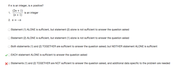
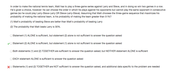
The three game combination he is choosing is the order in which he plays against Steve and Larry. We want to see whether we can get above 51%. So we give him the greatest probability of winning by having him play Larry twice and play Steve in the middle game.
Once that is set, Matt is not choosing any more, at least for the purposes of this question. He is taking his chances, rolling the dice in a sense. He plays three games and we want to know, given the probability of his winning each, what the probability of his winning two in a row is.
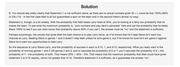
There are multiple ways he could do that. He could win the first two, he could win the last two, or he could win all three, and in any of those cases he would make the team. On the other hand if he were to win only the middle game he would not make the team.
When you have multiple ways to win, your probability of winning is greater than it would be were you to have only one way to win, right? Consider a six sided die. If you only win if you roll a 6, you don't have as high a probability of winning as you would were the rule to be that you win if you roll a 6 or a 1.
Look at that example. The probability of rolling a 6 is 1/6, and the probability of rolling a 1 is 1/6. The probability of rolling a 1 or a 6 is 1/3 or 2/6. So to get the probability of doing one thing OR another, you add the probabilities of each of those mutually exclusive outcomes occurring. If they were not mutually exclusive, meaning only one of them can occur at a time, then the method would be a little different.
Similarly Matt has multiple mutually exclusive ways via which he can make the team. So to figure out the total probability of his making the team, you add up the probabilities of the three ways.
Last edited by
MartyMurray on Fri Jan 29, 2016 5:37 pm, edited 2 times in total.