If L & W represent the length and width, respectively, of the rectangle above, what is the perimeter?
1). 2L+W=40
2). L+W=25
1). 2L+W=40
2). L+W=25
BREAKING: Target Test Prep releases Brand New 2026 On Demand GMAT prep course
RedeemTarget Test Prep · GMAT
Learn live with an expert or move at your own pace. Every option includes the complete TTP study system.

with Chris Peckover


with Logan Thompson
Complete access from day one. Study on your schedule.
Compare the format, schedule, and included access before enrolling. Prices and seat counts shown reflect the supplied offer details.

Perimeter of a rectangle with length L and width W = L+L+W+W = 2L + 2W = 2(L+W).scottchapman wrote:If L & W represent the length and width, respectively, of the rectangle above, what is the perimeter?
1). 2L+W=40
2). L+W=25

Target question: What is the perimeter?scottchapman wrote:If L & W represent the length and width, respectively, of the rectangle above, what is the perimeter?
1). 2L + W = 40
2). L + W = 25


EVERYONE struggles with Data Sufficiency (DS) questions at first. Keep in mind that this question type is unique to the GMAT, so it's totally foreign territory.scottchapman wrote:Thank you all for your responses. I struggle with DS and I think part of the reason for it is not rewording the question effectively. It makes sense after I see you guys go through the steps, but for whatever reason, I continue to make the same errors. I'm assuming I just need more practice...
The geometry problem above is a VALUE DS: a DS whose question stem asks for a specific value.scottchapman wrote:Thank you all for your responses. I struggle with DS and I think part of the reason for it is not rewording the question effectively. It makes sense after I see you guys go through the steps, but for whatever reason, I continue to make the same errors. I'm assuming I just need more practice...
Statement 1: 2L + W = 40If L & W represent the length and width, respectively, of the rectangle above, what is the perimeter?
1). 2L + W = 40
2). L + W = 25
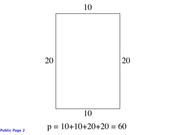

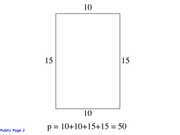
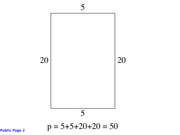
You'll definitely get there. Once you get the hang of the format, you may find yourself scoring higher on DS than on PS, even if the questions seem hard. DS is MUCH more guessable than PS, so you can get away with a lot of inspiring guesswork / trial and error / risk intelligence, as opposed to PS where you often need to know the math in question.scottchapman wrote:Thank you all for your responses. I struggle with DS and I think part of the reason for it is not rewording the question effectively. It makes sense after I see you guys go through the steps, but for whatever reason, I continue to make the same errors. I'm assuming I just need more practice...
New here Create free account



















