
In the figure, lines AB, CD and EF are parallel, and lines B

This topic has expert replies
User avatar
Elite Legendary Member
Posts: 3991
Joined: Fri Jul 24, 2015 2:28 am
Location: Las Vegas, USA
Thanked: 19 times
Followed by:37 members

Timer

00:00

Your Answer

A

B

C

D

E

Global Stats

[GMAT math practice question]

In the figure, lines AB, CD and EF are parallel, and lines BC and DE are parallel. What is the length of CD?
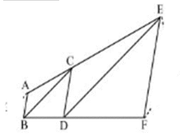
Image

1) AB=3
2) EF=12
Source: — Data Sufficiency |

User avatar
Elite Legendary Member
Posts: 3991
Joined: Fri Jul 24, 2015 2:28 am
Location: Las Vegas, USA
Thanked: 19 times
Followed by:37 members

by Max@Math Revolution » Thu Jul 25, 2019 12:11 am

Timer

00:00

Your Answer

A

B

C

D

E

Global Stats

=>

Forget conventional ways of solving math questions. For DS problems, the VA (Variable Approach) method is the quickest and easiest way to find the answer without actually solving the problem. Remember that equal numbers of variables and independent equations ensure a solution.

The first step of the VA (Variable Approach) method is to modify the original condition and the question. We then recheck the question. We should simplify conditions if necessary.

Triangles ABC and CDE are similar, and triangles BDC and DFE are similar. So, we can set up the proportion AB:CD = CD:EF.
Since CD^2 = AB*EF, conditions 1) and 2) together give us sufficient information to calculate the value of CD.

Therefore, C is the answer.
Answer: C

















