
BREAKING: Target Test Prep releases Brand New 2026 On Demand GMAT prep course

Redeem

Necessary Assumption

Expert replies
by infiniti007 » Wed Aug 19, 2015 9:19 pm
Any help/guidance on how to approach the following would be appreciated.

In casual conversation, people experience little psychological discomfort in admitting that they have some particular character flaw if and only if they consider trivial the flaw to which they admit. Therefore, if in casual conversation an individual readily admits that he or she has some particular character flaw, the individual must not consider that flaw to be serious.

Which one of the following is an assumption necessary to the argument?

A) Most character flaws are considered trivial by those who have them.
B) People admit to having only those character flaws that most other people consider trivial.
C) In casual conversation, people admit to having character flaws only when they must.
D) In casual conversation, people most readily admit to having a character flaw only when that admission causes them little psychological discomfort.
E.) In casual conversation, people do not speak of things that would give others an unfavorable impression of their character.
Join the discussion
Source: — Critical Reasoning |

by [email protected] » Thu Aug 20, 2015 8:30 am
infiniti007 wrote:Any help/guidance on how to approach the following would be appreciated.

In casual conversation, people experience little psychological discomfort in admitting that they have some particular character flaw if and only if they consider trivial the flaw to which they admit. Therefore, if in casual conversation an individual readily admits that he or she has some particular character flaw, the individual must not consider that flaw to be serious.

Which one of the following is an assumption necessary to the argument?

A) Most character flaws are considered trivial by those who have them.
B) People admit to having only those character flaws that most other people consider trivial.
C) In casual conversation, people admit to having character flaws only when they must.
D) In casual conversation, people most readily admit to having a character flaw only when that admission causes them little psychological discomfort.
E.) In casual conversation, people do not speak of things that would give others an unfavorable impression of their character.
I believe the answer is D because there is a possibility of admitting a flaw with psychological discomfort.So option D clearly gets rid of that making the conclusion foolproof.
Join the discussion

by ddg » Sun Aug 23, 2015 6:29 am
infiniti007 wrote:Any help/guidance on how to approach the following would be appreciated.

In casual conversation, people experience little psychological discomfort in admitting that they have some particular character flaw if and only if they consider trivial the flaw to which they admit. Therefore, if in casual conversation an individual readily admits that he or she has some particular character flaw, the individual must not consider that flaw to be serious.

Which one of the following is an assumption necessary to the argument?

A) Most character flaws are considered trivial by those who have them.
B) People admit to having only those character flaws that most other people consider trivial.
C) In casual conversation, people admit to having character flaws only when they must.
D) In casual conversation, people most readily admit to having a character flaw only when that admission causes them little psychological discomfort.
E.) In casual conversation, people do not speak of things that would give others an unfavorable impression of their character.
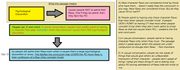
--------------------------------------------------------------------------------------------------------
Refer to image: :)

Image

So from the image (check it out first) ---> Negation of D renders the conclusion worthless ---> D is your OA.
--------------------------------------------------------------------------------------------------------
In times of stress, fashion is always outrageous ;-)

If my explanation helped you, lemme know by clicking the 'thank' button! :)
Join the discussion

by Brent@GMATPrepNow » Sun Aug 23, 2015 8:20 am
ddg's use of the Negation Technique is great.
Here's a free video that covers this technique (it also explains how to tackle Assumption questions in general): https://www.gmatprepnow.com/module/gmat- ... ng?id=1139

Cheers,
Brent
Brent Hanneson - Creator of GMATPrepNow.com
Image
Join the discussion

by ddg » Sun Aug 23, 2015 9:43 pm
Thank you so much Brent!! :)


------------------------------------------------------------------------------------------------------------
In times of stress, Fashion is always outrageous ;-)
Join the discussion

by sandipgumtya » Mon Aug 31, 2015 8:23 pm
Though I got this right but I am not very sure of the intended meaning here.Experts can u pl explain a bit more.
Join the discussion

















