josh80 wrote:The entire exterior of a large wooden cube is painted red, and then the cube is sliced into n³ smaller cubes (where n > 2). Each of the smaller cubes is identical. In terms of n, how many of these smaller cubes have been painted red on at least one of their faces?
A) 6n²
B) 6n² - 12n + 8
C) 6n² - 16n + 24
D) 4n²
E) 24n - 24
Hey josh80,
When posting questions, be careful with your exponents. Writing n3 can be confusing.
To show exponents, you can use "^" as in "...the cube is sliced into
n^3 smaller cubes"
Okay, a fast approach here is to examine a specific case (i.e., a specific value of n) and compare the result to the answer choices.
So, let's take a wooden cube and slice it into
3³ smaller cubes (i.e., n =
3).
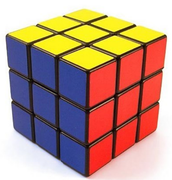
There are 27 smaller cubes altogether, and ONLY 1 of them (the small cube in the very center) does not have paint on it. So, there are
26 cubes that have paint on them.
So, when n = 3, there are 26 cubes that have paint on them.
Now, we'll check the answer choices and see which one yields a value of
26 when n =
3
A) 6(
3)² =
54 NOPE
B) 6(
3)² - 12(
3) + 8 =
26 PERFECT!
C) 6(
3)² - 16(
3) + 24 =
30 NOPE
D) 4(
3)² =
36 NOPE
E) 24(
3) - 24 =
48 NOPE
Answer:
B
Cheers,
Brent
Brent Hanneson - Creator of GMATPrepNow.com