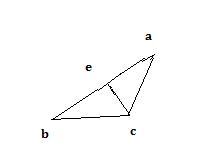
macattack wrote:Thx Anup but I know this information however what i do not know is how we establish the corresponding sides! plz help
hey,
* again, the internet is your friend here. seek and you shall find.
* basically, the idea is that you should
visually match up the two similar triangles, so that they are "facing the same way".
i used the example of a model car and a real car. that's a particularly easy example to grasp:
-- the doors on the model correspond to the doors on the real car
-- the pedals in the model correspond to the pedals in the real car
-- the roof of the model corresponds to the roof of the real car
etc.
the point is that, in your head, you imagine the model car and the real car
in the same position, facing the same way, and then you just think about parts that are in the same place on both of them.
when you see a pair of similar triangles, just think of one of them as a "model" of the other one. then it's the same kind of reasoning.
the trick here is that you'll sometimes have to rotate or "flip" one of the triangles to get them to line up, as you do here. that can stretch your capacity for visualization a bit, but give it a shot -- you should be able to figure it out if you play around with it.
if you still absolutely don't get it, after messing around with it on paper for a while, then make the figure (to scale!) on paper, literally cut it out, and get the triangles to line up.
Ron has been teaching various standardized tests for 20 years.
--
Pueden hacerle preguntas a Ron en castellano
Potete chiedere domande a Ron in italiano
On peut poser des questions à Ron en français
Voit esittää kysymyksiä Ron:lle myös suomeksi
--
Quand on se sent bien dans un vêtement, tout peut arriver. Un bon vêtement, c'est un passeport pour le bonheur.
Yves Saint-Laurent
--
Learn more about ron