LulaBrazilia wrote:
What is the circumference of the circle above with center O?
1) The perimeter of triangle OXZ is 20 + 10 root(2)
2) The length of arc XYZ is 5*pi
IMPORTANT: For geometry DS questions, we are typically checking to see whether the statements "lock" a particular angle or length into having just one value. This concept is discussed in much greater detail in our free video:
https://www.gmatprepnow.com/module/gmat- ... cy?id=1103
This technique can save a lot of time. In fact, we can actually solve this question without applying any geometry.
First notice that the SHAPE of the diagram is already "locked in." That is, we have 2 radii that form a 90-degree angle and points X and Z are at the ends of the radii. The only part of this diagram that isn't locked in is the SIZE.
That is, the diagram can have many different sizes:
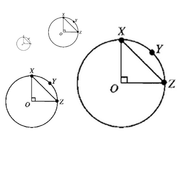
SUPER IMPORTANT: If a statement locks in the SIZE of the diagram, then that statement must be sufficient.
Target question: What is the circumference of the circle above with center O?
Statement 1: The perimeter of triangle OXZ is 20 + 10 root(2)
All we need to do here is recognize that we COULD draw the diagram (whatever size we wish) and then measure the perimeter of ∆OXZ. If the perimeter of ∆OXZ is less than 20 + 10 root(2), then draw a larger diagram. If the perimeter of ∆OXZ is greater than 20 + 10 root(2), then draw a smaller diagram.
Notice that we could keep doing this until we find the ONE DIAGRAM IN THE ENTIRE UNIVERSE in which the perimeter of ∆OXZ is EXACTLY 20 + 10 root(2).
At that point, we could measure the circle and
determine its circumference
Since we COULD answer the
target question with certainty, statement 1 is SUFFICIENT
Statement 2: The length of arc XYZ is 5*pi
Here, we can recognize that arc XYZ is 1/4 of the entire circumference. So,
the circumference must have length 20(pi)
Since we can answer the
target question with certainty, statement 2 is SUFFICIENT
ALTERNATIVELY, we COULD draw the diagram (whatever size we wish) and then measure the length of arc XYZ. If it's length is less than 5(pi) then draw a larger diagram. If the arc XYZ is greater than 5(pi), then draw a smaller diagram. We could keep doing this until we find the ONE DIAGRAM IN THE ENTIRE UNIVERSE in which arc XYZ has length 5(pi), at which point, we could measure the circle and
determine its circumference
Since we COULD answer the
target question with certainty, statement 2 is SUFFICIENT
Answer =
D
Cheers,
Brent
























