Hi akhilsuhag,
The logic in this CR question is based on "causality" (the idea that one thing causes another). This is a fairly common logic "construct" on the GMAT and you'll likely see it at least one on Test Day.
The Facts:
-A study followed a group of teenagers WHO HAD NEVER SMOKED and tracked whether they took up smoking (or not) and how their mental health changed.
-After 1 year, the incidence of depression in those who TOOK UP SMOKING was 4 times as high in those who had not taken up smoking.
-Nicotine changes brain chemistry, possibly affecting mood.
Conclusion:
-Smoking likely contributes to depression in teenagers.
The Logic: Based on the given information, it seems logical that smoking probably leads to depression in TEENAGERS WHO HAD NOT PREVIOUSLY BEEN SMOKERS.
Causality is a strict concept - to say that X causes Y, you have to assume that:
1) Something else did not cause Y instead
2) Y didn't cause X
3) It's a coincidence (the 2 things are not related)
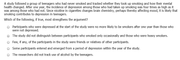
To strengthen this argument, we're probably looking for an answer that confirms any of the above assumptions. Answer A confirms that depression didn't cause the teenagers to take up smoking (which confirms the 2nd assumption).
GMAT assassins aren't born, they're made,
Rich