BREAKING: Target Test Prep releases Brand New 2026 On Demand GMAT prep course

Redeem

In the x-y plane, the graph of y=f(x)=ax^2+bx+c passes throu

Expert replies
by Max@Math Revolution » Tue Apr 30, 2019 11:39 pm

Timer

00:00

Answers

A

B

C

D

E

Stats

Difficulty

[GMAT math practice question]

In the x-y plane, the graph of y=f(x)=ax^2+bx+c passes through (-2,0) and (2,0). Is f(4) < 0?

1) f(0) > 0
2) f(-3) < 0
Join the discussion
Source: — Data Sufficiency |

by Max@Math Revolution » Thu May 02, 2019 11:00 pm
=>

Forget conventional ways of solving math questions. For DS problems, the VA (Variable Approach) method is the quickest and easiest way to find the answer without actually solving the problem. Remember that equal numbers of variables and independent equations ensure a solution.

The first step of the VA (Variable Approach) method is to modify the original condition and the question. We then recheck the question.
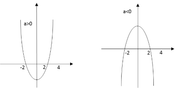
Since f(2) = f(-2) = 0, there are two possible ways that this graph can lie in the xy-plane.

Image

The question asks if a < 0.
Condition 1) tells us that a < 0 since f(0) > 0. Thus, condition 1) it is sufficient.
Condition 2) also tells us that a < 0 since f(-3) < 0. Thus, it is sufficient too.


Therefore, D is the answer.
Answer: D

If the original condition includes "1 variable", or "2 variables and 1 equation", or "3 variables and 2 equations" etc., one more equation is required to answer the question. If each of conditions 1) and 2) provide an additional equation, there is a 59% chance that D is the answer, a 38% chance that A or B is the answer, and a 3% chance that the answer is C or E. Thus, answer D (conditions 1) and 2), when applied separately, are sufficient to answer the question) is most likely, but there may be cases where the answer is A,B,C or E.
Join the discussion