

An Array of Problems

This topic has expert replies
Master | Next Rank: 500 Posts
Posts: 110
Joined: Sun May 25, 2008 3:45 pm

An Array of Problems

by ajmoney09 » Fri Jan 16, 2009 10:35 am
Sorry, i have many questions. Some of them I just dont understand what they are asking for, and some I just dont know how to solve for. Thanks in Advance for alll your help.
1. A certain basketball team that has played of its games has a record of 17 wins and 3 losses. What is the greatest number of the remaining games that the team can lose and still win at least of all of its games?
(A) 7
(B) 6
(C) 5
(D) 4
(E) 3
OA is D
2.
Image
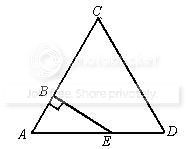
20. If each side of ΔACD above has length 3 and if AB has length 1, what is the area of region BCDE?
(A) 9/4
(B) 7/4 (sqrt 3)
(C) 9/4 (sqrt 3)
(D) 7/2 (sqrt 3)
(E) 6 + (sqrt 3)
OA is B
3. If r☉s = rs + r + s, then for what value of s is r ☉s equal to r for all values of r?
(A) –1 (B) 0 (C) 1
(D) (E) r
OA is B
4. Which of the following integers does NOT have a divisor greater than 1 that is the square of an integer?
(A) 75
(B) 42
(C) 32
(D) 25
(E) 12
OA is B
5.
What is the least possible product of 4 different integers, each of which has a value between –5 and 10, inclusive?
(A) –5040 (B) –3600
(C) –720 (D) –600
(E) –120
OA is B
6. If a motorist had driven 1 hour longer on a certain day and at an average rate of 5 miles per hour faster, he would have covered 70 more miles than he actually did. How many more miles would he have covered than he actually did if he had driven 2 hours longer and at an average rate of 10 miles per hour faster on that day?
(A) 100 (B) 120 (C) 140
(D) 150 (E) 160
OA is D[/quote]
Last edited by ajmoney09 on Fri Jan 16, 2009 7:03 pm, edited 1 time in total.
Source: — Problem Solving |

Senior | Next Rank: 100 Posts
Posts: 73
Joined: Wed Jan 07, 2009 1:00 pm
Location: Tampa, FL
Thanked: 9 times
GMAT Score:630

Re: An Array of Problems

by Mr2Bits » Fri Jan 16, 2009 11:04 am
ajmoney09 wrote:Sorry, i have many questions. Some of them I just dont understand what they are asking for, and some I just dont know how to solve for. Thanks in Advance for alll your help.
1. A certain basketball team that has played of its games has a record of 17 wins and 3 losses. What is the greatest number of the remaining games that the team can lose and still win at least of all of its games?
(A) 7
(B) 6
(C) 5
(D) 4
(E) 3
OA is D
Is something missing here? Particuarly this "still win at least of all of its games?"

Still win at least X of all it's games

Outside of that, Ill work the rest and let you know.

Senior | Next Rank: 100 Posts
Posts: 73
Joined: Wed Jan 07, 2009 1:00 pm
Location: Tampa, FL
Thanked: 9 times
GMAT Score:630

Re: An Array of Problems

by Mr2Bits » Fri Jan 16, 2009 11:14 am
ajmoney09 wrote:
4. Which of the following integers does NOT have a divisor greater than 1 that is the square of an integer?
(A) 75
(B) 42
(C) 32
(D) 25
(E) 12
OA is B
Easiest way to do this is to figure out which of the numbers above cannot be divided by a combination of multiples where one of them is squared.

So here we go :
A) 75 = 5*5*3 = 5^2 * 3 - NOPE
B) 42 = 7*3*2 = Nothing can be squared - YES
C) 32 = 2*4*4 = 2*4^2 - NOPE
D) 25 = 5^2 - NOPE
E) 12 = 2*2*3 = 2^2*3 - NOPE

Hope this helps

Senior | Next Rank: 100 Posts
Posts: 73
Joined: Wed Jan 07, 2009 1:00 pm
Location: Tampa, FL
Thanked: 9 times
GMAT Score:630

Re: An Array of Problems

by Mr2Bits » Fri Jan 16, 2009 11:31 am
ajmoney09 wrote:
20. If each side of ΔACD above has length 3 and if AB has length 1, what is the area of region BCDE?
(A)
(B)
(C)
(D)
(E)
OA is B
Whatever Answer B is I hope it is 6 + sqrt3

We know that AB = 1 so BC =2
CD =3 as thats given
Now we need to find DE + EB

This is an equilateral traiangle so you can follow the 30/60/90 theorm which gives us a 1,2,sqrt3 triangle. So with that said, AB = 1 AE = 2 and BE = sqrt3. BC + CD + DE + EB = 2 + 3 + 1 + sqrt3 = 6 + sqrt3

Senior | Next Rank: 100 Posts
Posts: 73
Joined: Wed Jan 07, 2009 1:00 pm
Location: Tampa, FL
Thanked: 9 times
GMAT Score:630

Re: An Array of Problems

by Mr2Bits » Fri Jan 16, 2009 11:56 am
ajmoney09 wrote:
6. If a motorist had driven 1 hour longer on a certain day and at an average rate of 5 miles per hour faster, he would have covered 70 more miles than he actually did. How many more miles would he have covered than he actually did if he had driven 2 hours longer and at an average rate of 10 miles per hour faster on that day?
(A) 100 (B) 120 (C) 140
(D) 150 (E) 160
OA is D
Ok so this is saying that this dude would have covered 70 miles extra had he put in a extra hour and been flooring it 5MPH more. Look at this and find a common amount. I see 35. So homeboy was doing 35MPH in the left lane for 6 hours with a total distance of 210 miles. Had he not been creeping and drove an extra hour he could have made 280 miles ( 7hours*40MPH + the extra 1hour drive of 40 miles)

So they are wanting to know, had he been doing 45MPH for 8 hours, how many more miles could he have covered over his original amount of 210.

Well he would have covered 10 more miles each hour for the first 6 = 60 miles and then an extra 90 miles the extra 2 hours = 360 - orignal amount of 210 = 150 Miles.
Last edited by Mr2Bits on Fri Jan 16, 2009 12:06 pm, edited 1 time in total.

User avatar
Site Admin
Posts: 2567
Joined: Thu Jan 01, 2009 10:05 am
Thanked: 712 times
Followed by:550 members
GMAT Score:770

by DanaJ » Fri Jan 16, 2009 11:58 am
First one: You've left smth out of this one. Please check the problem again and correct it.

Second one:

I'm not sure if you guys know this property of right triangles with 30 and respectively 60 degrees angles. The cathetus facing the 30 degree angle is half the size of the hypothenuse. So that means that 2 AB = AE = 2. That's because, since triangle ACD is equilateral, each of its angles is 60 degr. That makes angle AEB 30 degr.
So you have:

AB = 1, so AE = 2, which, using Pithagora's theorem, gives us BE = sqrt(3). This means that the area of triangle ABE is [sqrt(3)]/2. Since the area of triangle ACD is [9sqrt(3)]/4, then the surface of BCDE is [b][7sqrt(3)]/4[/b].


Third one:

r [round sign] s = rs + s +r. This should always equal r, so you would have rs + s + r = r. Eliminate the r and you get rs +s =0. That means that s(r+1)=0. Now, that can be obtained if:
a. s = 0, which means r+1 can be whatever so r can also be whatever
b. r+1=0, so s can be whatever. But r should be whatever so this one is gone
c. both r+1 and s are 0, but we would not have any r to fit the description.
So s can only be 0 if we want to meet the requirements for r.

Fourth one:

Try going for prime factors if you run out of ideas.
Here's how I see it:
75 = 25 * 3 = 5^2 * 3
42 = 6 * 7 - no squares here, so you just stop and pick B.

Fifth one:

Well, most people would go for the four smallest integers smaller than zero. But that would be incorrect, since picking four negative integers would give you a positive product. Since 5 is smaller than 10, I'd go with three positive integers (the biggest there are) and the smallest negative integer (-5). That gives you -5*8*9*10=-720*5 =-3500-100=-3600.


Sixth one:
I make the following notations:
s = speed
t = time
d = distance
It says there:
(s+5)(t+1) = d +70 or st + s +5t + 5 = d+70. Since st = d, you can safely say that s + 5t + 5 = 70, or that s +5t = 65.
Then if says there:
(s+10)(t+2)=d + x (you're supposed to find out x), which means that you have st + 2s + 10t + 20 = d +x. Following the same steps we get 2s+10t+20 = x. Now what you're supposed to notice is that 2s+10t = 2(s+5t) = 2*65 = 130. That means that your x will be 130+20 = 150.

Man I've written a lot... Hope someone will actually bother to read...

Senior | Next Rank: 100 Posts
Posts: 73
Joined: Wed Jan 07, 2009 1:00 pm
Location: Tampa, FL
Thanked: 9 times
GMAT Score:630

Re: An Array of Problems

by Mr2Bits » Fri Jan 16, 2009 12:09 pm
Mr2Bits wrote:
ajmoney09 wrote:
20. If each side of ΔACD above has length 3 and if AB has length 1, what is the area of region BCDE?
(A)
(B)
(C)
(D)
(E)
OA is B
Whatever Answer B is I hope it is 6 + sqrt3

We know that AB = 1 so BC =2
CD =3 as thats given
Now we need to find DE + EB

This is an equilateral traiangle so you can follow the 30/60/90 theorm which gives us a 1,2,sqrt3 triangle. So with that said, AB = 1 AE = 2 and BE = sqrt3. BC + CD + DE + EB = 2 + 3 + 1 + sqrt3 = 6 + sqrt3

CRAP, I calulated the perimeter not area. :roll:

Legendary Member
Posts: 891
Joined: Sat Aug 16, 2008 4:21 am
Thanked: 27 times
Followed by:1 members
GMAT Score:660(

by 4meonly » Fri Jan 16, 2009 12:11 pm
Area will be (7sqrt3)/4

Senior | Next Rank: 100 Posts
Posts: 73
Joined: Wed Jan 07, 2009 1:00 pm
Location: Tampa, FL
Thanked: 9 times
GMAT Score:630

by Mr2Bits » Fri Jan 16, 2009 12:45 pm
4meonly wrote:Area will be (7sqrt3)/4
1/2 B*H ?

Master | Next Rank: 500 Posts
Posts: 110
Joined: Sun May 25, 2008 3:45 pm

by ajmoney09 » Fri Jan 16, 2009 7:03 pm
Okay i fixed the number 2 question.

Master | Next Rank: 500 Posts
Posts: 110
Joined: Sun May 25, 2008 3:45 pm

by ajmoney09 » Fri Jan 16, 2009 7:46 pm
Okay amazing answers. I understnad all of them now, i re-did the one we are missing the answer choices tooo.. thanks again

Master | Next Rank: 500 Posts
Posts: 392
Joined: Thu Jan 15, 2009 12:52 pm
Location: New Jersey
Thanked: 76 times

by truplayer256 » Fri Jan 16, 2009 8:04 pm
6. If a motorist had driven 1 hour longer on a certain day and at an average rate of 5 miles per hour faster, he would have covered 70 more miles than he actually did. How many more miles would he have covered than he actually did if he had driven 2 hours longer and at an average rate of 10 miles per hour faster on that day?
(A) 100 (B) 120 (C) 140
(D) 150 (E) 160
If you kind of think about this question for a minute, you can automatically realize that the motorist covers 70 miles in one hour. So, it's safe to assume that the motorist was going 70-5=65 mph before he drove 1 hour longer. Now, to answer the question, all we have to do is add 65 to 10 and multiply our answer by two.

We get:

75*2= 150
















