BREAKING: Target Test Prep releases Brand New 2026 On Demand GMAT prep course
RedeemInterview with the CEO of the Association of Professionals in Business Management
This week I had the pleasure of interviewing Devi Vallabhaneni, the President and CEO of the Association of Professionals in Business Management (APBM). The APBM is an organization that has a mission to make business management a profession--in line with law, medicine, engineering and accounting. Devi and I spoke about APBM's work in developing the Certified Associate Business Manager Credential (CABM), as well as her personal experiences attending Harvard Business School.
Without further ado, here's my interview with Devi:
Who are you?
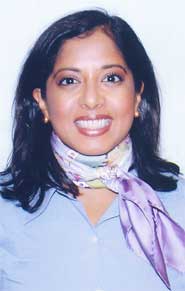 Im the daughter of Indian immigrants, and we moved to the US when I was three. I learned English by watching Sesame Street. When I was eight, my dad started studying for the CPA, and when I was in junior high he started writing guide books for other business certifications. He didnt know how to type, so I would type into WordPerfect for DOS while he would dictate. We would then review and edit the manuscript that was printed out on a dot-matrix printer.
Over the years my father earned 24 professional certifications and authored over 60 books on those certifications, and I helped him write, edit, publish, and sell each one. In his book Outliers, Malcolm Gladwell says it takes about 10,000 hours to become an expert in something , and so quite by accident, I find myself an expert in standardized tests and business certifications.
For the last nine years, my dad and I have been developing standardized tests and professional certifications that educate and certify people to become managers in all areas of business. Most recently, I've authored What's Your MBA IQ? A Manager's Career Development Tool, published by John Wiley & Sons, 2009.
What is the CABM?
The Certified Associate Business Manager Credential is a professional certification, like the CPA or CFA, for entry to mid-level managers; the CABM is also for people preparing for an MBA that tests the following critical business areas:
- General Management, Leadership, and Strategy
- Operations Management
- Marketing Management
- Quality and Process Management
- Human Resources Management
- Accounting
- Finance
- Information Technology
- Corporate Control, Law, Ethics, and Governance
- International Business
It equips people with a mastery of the fundamentals and therefore empowers them to excel and get the most value out of their MBA, be it at a small school or a top program. The CABM Exam consists of 200 multiple-choice questions to be completed in a four-hour session at Pearson VUE Testing Centers worldwide.
Why should MBA aspirants be interested in the CABM Credential?
The GMAT is testing aptitude. In other words, it tests your intellectual horsepower, but its not testing business concepts directly. The CABM provides the other half of the picture. It completes the view of the skills you will use in your MBA program so that business schools better understand your skill profile. Because it covers business concepts, it shows commitment to a career in business, reveals your ability to handle rigor, and even helps you chart your course more effectively by exposing you to the full range of business concepts and helping you better explore the avenues you might want to pursue post-MBA . There is powerful synergy between the GMAT, the CABM, and the MBA.
Will having a CABM help me in my MBA admissions?
Beyond what I said above, currently, Harvard, Booth, Kellogg, Wharton, and ISB officially recognize the CABM as another meaningful data point in a candidates profile. More schools will recognize the credential in the coming months. When you earn the credential, we will send your transcript to any school or employer you request. It will become part of your academic record and help bolster your profile.
Why did you decide to found the Association of Business Professionals in Management (APBM)?
My dad realized that in all other professions, for example law and medicine, there is a knowledge standard. He wanted to create one for business. The idea is to equip everyone - whether they are in IT, Finance, Marketing, or Operations - with a holistic view of business management. Because of my experience at HBS, I realized that MBA candidates could use this same holistic knowledge base to their advantage in the admissions process and in the MBA classroom, especially those from a non-business background, such as liberal arts, engineering, or IT.
How did your HBS experience help you in the work you do today?
I had a CPA, worked internationally, and had four years of consulting experience at a blue chip firm, so I did well in my accounting and finance classes. But I really struggled with operations and marketing because the concepts were all totally new to me. And I saw some of my classmates struggle even more. We werent coming into our MBA program as generalists; we had all specialized in whatever field we had chosen out of college.
The classroom was diverse and that made a great educational experience, but I really wished I had had the generalist overview coming in. It would have made my life easier and given me more of a foothold to grow during the program. I found myself focusing more on academics than I preferred, and as a result I felt like I missed out on numerous recruiting and social opportunities. I thought I could have gotten much more out of the program as a whole had I started with a better grasp of the fundamentals. I wanted to help others succeed where I struggled.
Thus my experiences at HBS lead me to develop the APBM.
As a successful HBS alum, what words of wisdom would you provide to MBA applicants?
Dont follow the pack. Understand your own unique strengths and weaknesses and invest in yourself in the ways that will give you the best return, which may not be the same ways that work for your friends and colleagues.
Also, it does work out. You are facing a lot of fear and uncertainty, but you will get into a school you like, and you will thrive there. That seems far away because you are focused on admissions, but view this time as a chance to explore who you are. You will succeed in all you do if you are true to yourself. The more you can figure out your own authentic goals and ambitions in life now, the more successful you will be in the admissions process, in the program of your choice, and in your career beyond.
Where can Beat The GMAT members go to learn more about the CABM Credential and The APBM?
See you in the classroom!