BREAKING: Target Test Prep releases Brand New 2026 On Demand GMAT prep course

Redeem

Target Test Prep · GMAT

Choose how you want to prepare

Learn live with an expert or move at your own pace. Every option includes the complete TTP study system.

★★★★★5.0563 reviews
Newsweek Readers’ Choice Awards 2026 winner: Target Test Prep, #1 Test Prep
NEWSWEEK READERS’ CHOICE AWARDS 2026

Target Test Prep was voted #1 Best Test Prep in the 2026 Newsweek Readers’ Choice™ Awards.

GMATLiveTeach Starts Oct 17
Chris Peckover, Target Test Prep GMAT expert
LIVE ONLINE CLASSES

Get Ready for GMAT Test Day Faster with Live Online Classes

with Chris Peckover, 100th-Percentile GMAT Scorer

Oct 17 · Chris Peckover
Sat · 11:00 AM to 2:00 PM ET
Oct 20 · Chris Peckover
Tue, Thu · 8:00 to 10:00 PM ET
Oct 25 · Josh Braslow
Sun · 1:00 to 4:00 PM ET
Included
40 hours of live online classes + 6 months of TTP OnDemand
  • Attend the first class for free
  • Every class is recorded, so you never fall behind
View classes & enroll
Limited seats availableTarget Test Prep
EALiveTeachOnDemand 5 seats left Start anytime
EXECUTIVE ASSESSMENT

Target Test Prep EA OnDemand

Self-paced EA prep. Study on your schedule.

Logan Thompson
EXECUTIVE ASSESSMENT

Sep 6 to Dec 6, 2026

with Logan Thompson

165+ EA score guarantee
$05-day trial no automatic billing
Schedule
Sun · 9:30 AM to 12:30 PM ET
Included
40 hours of live online classes plus six months of access to the complete TTP EA OnDemand course.
  • 165+ EA Score Guarantee
  • 4,100+ Quant, Verbal, and Integrated Reasoning practice questions
  • 400+ hours of in-depth video lessons
  • 3,000+ step-by-step video solutions
View EA class & enroll Start free 5-day trial
Limited cohort · enrollment openTrial includes full course accessTarget Test Prep
GMATOnDemand Start anytime
SELF-PACED MASTERCLASS

Target Test Prep GMAT OnDemand

Complete access from day one. Study on your schedule.

715+ score guarantee
$0to start then $127/mo
  • Personalized study plan and analytics
  • Thousands of lessons and practice questions

Compare the format, schedule, and included access before enrolling. Prices and seat counts shown reflect the supplied offer details.

Increasing crime commited by teens

Expert replies
by Olga Lapina » Mon Feb 17, 2014 10:45 am
Hi everybody!

I am definetely lost in this question.
The stem asks what argument would weaken the conclusion.

I understand that the conclusion is that the solution made by city authorities in unlikely to affect the problem. Thus the weaking argument must prove the opposite - that measures taken ARE effective.

The correct answer is B , however I believe it is strenghening the conclusion.

Please help.
Image
Join the discussion
Source: — Critical Reasoning |

by GMATGuruNY » Mon Feb 17, 2014 3:12 pm
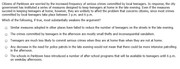
Citizens of Parktown are worried by the increased frequency of serious crimes committed by local teenagers. In response, the city government has instituted a series of measures designed to keep teenagers at home in the late evening. Even if the measures succeed in keeping teenagers at home, however, they are unlikely to affect the problem that concerns citizens, since most crimes committed by local teenagers take place between 3pm and 6pm.

Which of the following,if true, most substantially weakens the argument ?

1) Similar measures adopted in other places have failed to reduce the no of teenagers in the late evening
2) Crimes committed by teenagers in the afternoon are mostly small thefts and inconsequential vandalism.
3) teenagers are much less likely to commit serious crimes when they are at home than when they are not at home
4) Any decrease in the need for police patrols in late evening would not mean that there could be more intensive patrolling in the afternoon
5) The schools in Parktown have introduced a number of after school programs that will be available to teenagers until 6pm on weekday afternoons

Please explain your pick.

Premise: The city government has instituted measures to keep teenagers at home in the late evening, but MOST CRIMES committed by teenagers take place between 3pm and 6pm.
Conclusion: The new measures are unlikely to curb the increase in SERIOUS CRIMES.

Notice the change in LANGUAGE and SCOPE.
The premise is about MOST CRIMES, but the conclusion is about SERIOUS CRIMES.
MOST CRIMES ≠ SERIOUS CRIMES.
The assumption is that the CRIMES committed by teenagers between 3pm and 6pm are SERIOUS.
One way to weaken the conclusion is to show that the CRIMES committed by teenagers between 3pm and 6pm are NOT SERIOUS.

Answer choice B does just that: Crimes committed by teenagers in the afternoon are mostly small thefts and inconsequential vandalism.

The correct answer is B.
Private tutor exclusively for the GMAT and GRE, with over 20 years of experience.
Followed here and elsewhere by over 1900 test-takers.
I have worked with students based in the US, Australia, Taiwan, China, Tajikistan, Kuwait, Saudi Arabia -- a long list of countries.
My students have been admitted to HBS, CBS, Tuck, Yale, Stern, Fuqua -- a long list of top programs.

As a tutor, I don't simply teach you how I would approach problems.
I unlock the best way for YOU to solve problems.

For more information, please email me (Mitch Hunt) at [email protected].
Student Review #1
Student Review #2
Student Review #3

Join the discussion

by Mo2men » Mon Jun 06, 2016 4:32 am
GMATGuruNY wrote:
Citizens of Parktown are worried by the increased frequency of serious crimes committed by local teenagers. In response, the city government has instituted a series of measures designed to keep teenagers at home in the late evening. Even if the measures succeed in keeping teenagers at home, however, they are unlikely to affect the problem that concerns citizens, since most crimes committed by local teenagers take place between 3pm and 6pm.

Which of the following,if true, most substantially weakens the argument ?

1) Similar measures adopted in other places have failed to reduce the no of teenagers in the late evening
2) Crimes committed by teenagers in the afternoon are mostly small thefts and inconsequential vandalism.
3) teenagers are much less likely to commit serious crimes when they are at home than when they are not at home
4) Any decrease in the need for police patrols in late evening would not mean that there could be more intensive patrolling in the afternoon
5) The schools in Parktown have introduced a number of after school programs that will be available to teenagers until 6pm on weekday afternoons

Please explain your pick.

Premise: The city government has instituted measures to keep teenagers at home in the late evening, but MOST CRIMES committed by teenagers take place between 3pm and 6pm.
Conclusion: The new measures are unlikely to curb the increase in SERIOUS CRIMES.

Notice the change in LANGUAGE and SCOPE.
The premise is about MOST CRIMES, but the conclusion is about SERIOUS CRIMES.
MOST CRIMES ≠ SERIOUS CRIMES.
The assumption is that the CRIMES committed by teenagers between 3pm and 6pm are SERIOUS.
One way to weaken the conclusion is to show that the CRIMES committed by teenagers between 3pm and 6pm are NOT SERIOUS.

Answer choice B does just that: Crimes committed by teenagers in the afternoon are mostly small thefts and inconsequential vandalism.

The correct answer is B.

Why E is wrong?
Join the discussion

by GMATGuruNY » Tue Jun 07, 2016 4:05 am
Mo2men wrote:Why E is wrong?
Conclusion: The measures designed to keep teenagers home in the late evening are unlikely to affect the frequency of serious crimes committed by teenagers.

E: The schools in Parktown have introduced a number of after school programs that will be available to teenagers until 6pm on weekday afternoons.
Given that most crimes committed by local teenagers take place between 3pm and 6pm, this option implies that the number of serious crimes committed by teenagers might decrease as a result of these after-shool programs, STRENGTHENING the conclusion that the measures designed to keep teenagers home at night will NOT affect the frequency of serious crimes.
Since the correct answer choice must weaken the conclusion, eliminate E.
Private tutor exclusively for the GMAT and GRE, with over 20 years of experience.
Followed here and elsewhere by over 1900 test-takers.
I have worked with students based in the US, Australia, Taiwan, China, Tajikistan, Kuwait, Saudi Arabia -- a long list of countries.
My students have been admitted to HBS, CBS, Tuck, Yale, Stern, Fuqua -- a long list of top programs.

As a tutor, I don't simply teach you how I would approach problems.
I unlock the best way for YOU to solve problems.

For more information, please email me (Mitch Hunt) at [email protected].
Student Review #1
Student Review #2
Student Review #3
Join the discussion

by Mo2men » Tue Jun 07, 2016 4:27 am
GMATGuruNY wrote:
Mo2men wrote:Why E is wrong?
Conclusion: The measures designed to keep teenagers home in the late evening are unlikely to affect the frequency of serious crimes committed by teenagers.

E: The schools in Parktown have introduced a number of after school programs that will be available to teenagers until 6pm on weekday afternoons.
Given that most crimes committed by local teenagers take place between 3pm and 6pm, this option implies that the number of serious crimes committed by teenagers might decrease as a result of these after-shool programs, STRENGTHENING the conclusion that the measures designed to keep teenagers home at night will NOT affect the frequency of serious crimes.
Since the correct answer choice must weaken the conclusion, eliminate E.
Thanks Mitch.

I have another reason to eliminate E. Is my line of reasoning true?

Choice E offers alternate plan which is not relevant to the original plan discussed in the argument.i.e We should weaken the under discussion but without offering new plan or measures. Instead, we should interpret the fact cited by the argument by a way to weaken the argument.
Join the discussion

by GMATGuruNY » Tue Jun 07, 2016 5:13 am
Mo2men wrote:
Thanks Mitch.

I have another reason to eliminate E. Is my line of reasoning true?

Choice E offers alternate plan which is not relevant to the original plan discussed in the argument.i.e We should weaken the under discussion but without offering new plan or measures. Instead, we should interpret the fact cited by the argument by a way to weaken the argument.
This line of reasoning is valid.
Private tutor exclusively for the GMAT and GRE, with over 20 years of experience.
Followed here and elsewhere by over 1900 test-takers.
I have worked with students based in the US, Australia, Taiwan, China, Tajikistan, Kuwait, Saudi Arabia -- a long list of countries.
My students have been admitted to HBS, CBS, Tuck, Yale, Stern, Fuqua -- a long list of top programs.

As a tutor, I don't simply teach you how I would approach problems.
I unlock the best way for YOU to solve problems.

For more information, please email me (Mitch Hunt) at [email protected].
Student Review #1
Student Review #2
Student Review #3

Join the discussion