LUANDATO wrote: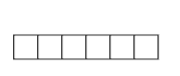
Each of the squares above is to have exactly one letter and nothing else placed inside it. If 3 of the letters are to be the letter X, 2 of the letters are to be the letter Y, and 1 of the letters is to be the letter Z, in how many different arrangements can the squares have letters placed in them?
A. 30
B. 60
C. 108
D. 120
E. 720
The OA is
B.
I'm really confused by this PS question. Experts, any suggestion about how to solve it? Thanks in advance.
Well, pretend for the moment that each of the letters is different, even though we know they are not all distinct.
So with 6 "different" letters in mind, place a letter in the first box. There are 6 ways to do this.
Place a letter in the second box from among the 5 remaining letters, so 5 ways to do this.
And so on. So there are 6x5x4x3x2x1 arrangements.
Now let's look at one possible pattern: XXXYYZ. Looking at the 3 Xs remember that the above calculation treats each X as different from another X, which we know isn't correct. If you had 3 distinct things in the 3 spots occupied by the Xs there would be 3x2x1 ways of arranging them, just as with our first calculation. Likewise, there are 2 Ys being treated as different which corresponds to 2x1 ways of arranging.
Since this is multiplication you need to reduce the original calculation using division as follows to adjust for the above:
(6x5x4x3x2x1)/((3x2x1)x(2x1)) = 5x4x3 =
60






















