Dear
Srinivasapriyan,
It looks as if you have already gotten a good treatment of this question, but I'll just add a few things.
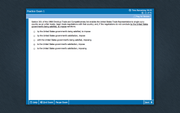
First, here's the question in plaintext:
Section 301 of the 1988 Omnibus Trade and Competitiveness Act enables the United States Trade Representative to single out a country as being an unfair trader, begin trade negotiations with that country, and, if the negotiations do not conclude by the United States government's being satisfied, to impose sanctions.
(A) by the United States government's being satisfied, to impose
(B) by the United States government's satisfaction, impose
(C) with the United States government's being satisfied, imposing
(D) to the United States government's satisfaction, impose
(E) to the United States government's satisfaction, imposing
One issue is the parallelism of the verbs
...enables the United States Trade Representative
//
to single out a country as being an unfair trader,
//
begin trade negotiations with that country,
and, if etc. etc.
//
to impose sanctions.
For parallelism in general, see
https://magoosh.com/gmat/2013/parallelis ... orrection/
The particular mistake (A) makes is a "
once outside, once inside" mistake. For more on what this means, and the correct structures, see:
https://magoosh.com/gmat/2013/gmat-paral ... ce-inside/
The participle, "
imposing", destroys the parallelism. We need the verb without "
to", just "
impose" --- only
(B) &
(D) have this.
The second is the idiom. The correct idiom here is:
to conclude to one's satisfaction
Only
(D) &
(E) have this, so
(D) must be the answer.
Here's a free GMAT idiom ebook.
https://magoosh.com/gmat/2013/gmat-idiom-ebook/
Let me know if you have any further questions.
Mike